
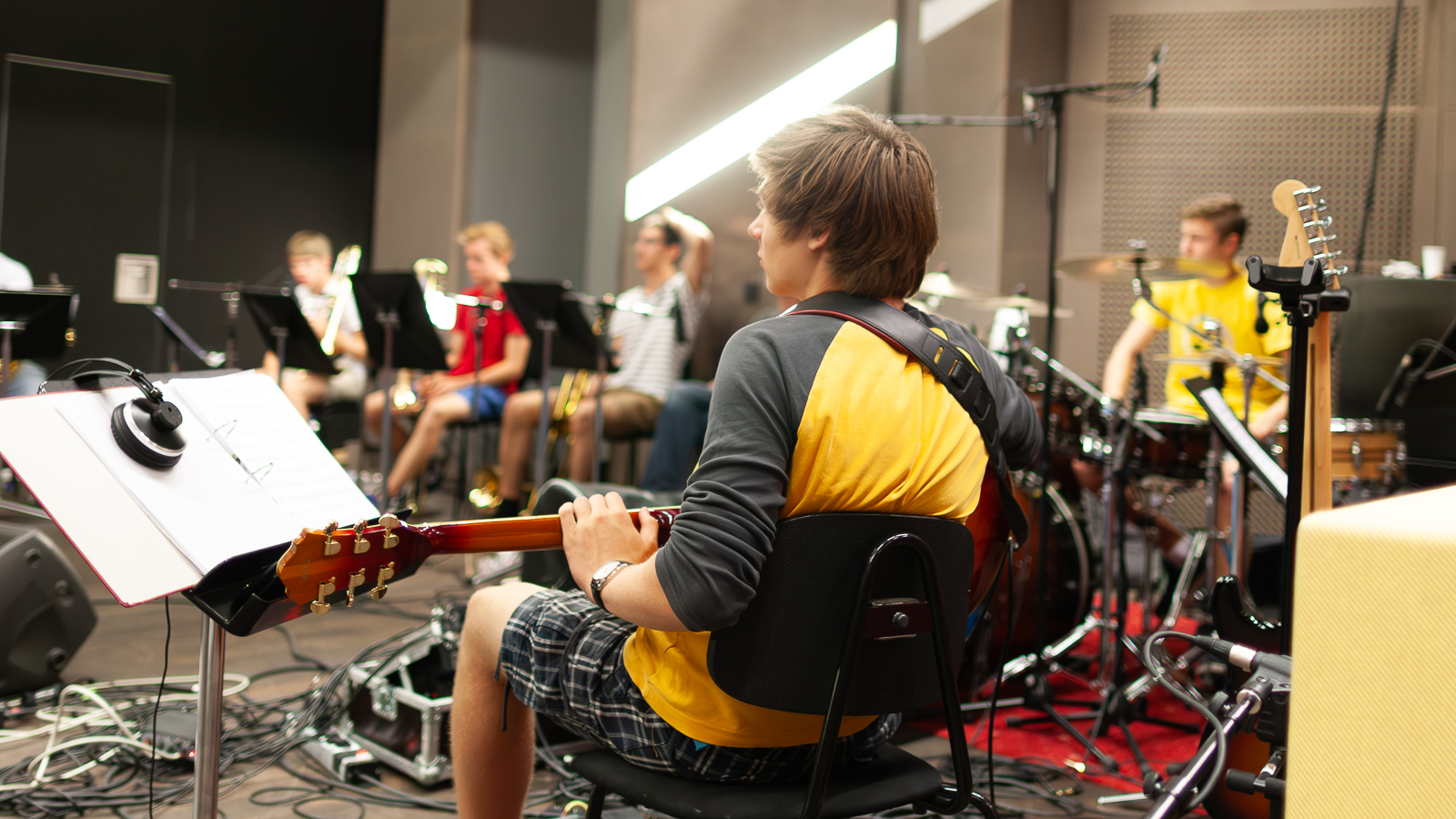
The KOMU curriculum is the basis for the music and art school education of around 200,000 students in Austria. After almost 20 years, a comprehensive revision is now planned, starting in 2026 and to be completed in 2027.
This process is not about completely rethinking a strong curriculum. On the contrary: many of its visionary principles are still highly relevant today. This is exactly why the curriculum remains such a strong foundation. At the same time, the social context and the reality of music schools have changed considerably over the past 20 years – including the development of many music schools into music and arts schools – and this is why an update is now needed.
Topics such as inclusion, health and wellbeing, child protection, sustainability, digital media and music outreach play a much greater role today than they did twenty years ago and therefore need to be reflected in the curriculum.
A particular focus of the process is participation. Alongside teachers and experts from all Austrian provinces, representatives from the German-speaking EMU regional group LLACHD will also be involved in order to bring in additional perspectives from other countries.
For the first time, students and graduates will also be actively included in the process. Many music schools already have experience with participation in individual projects, but what is new here is that students’ perspectives will now become part of the discussion on the general curriculum itself. Importantly, the process will not only involve highly motivated or especially talented students, but also “regular” music school students with different experiences, expectations and goals. This diversity is essential if we want to understand how music school is experienced today.
What remains after music school? What goals do young people pursue today? How should a curriculum be designed so that it can respond to different individual pathways – from professional ambitions to lifelong music-making? And how do students want to experience music school?
We see this participation as a major opportunity, but also as a challenge. It requires good moderation, suitable formats and a willingness to take different perspectives seriously. Young people need to be involved in a way that allows them to contribute meaningfully, rather than being included only symbolically.
At the same time, we are convinced that this is exactly where the added value lies: a curriculum that is developed together can create stronger connections, greater acceptance and a better reflection of the reality in music schools.
The international dimension is also important to us. We can also build on experiences from other European countries. Within EMU, Sweden has already shared valuable materials and approaches on student participation, which can serve as an important source of inspiration for this process. Finland’s Vision 2030 process also offers important insights into how broad participation and long-term strategic thinking can be integrated into the future development of music education.
The new curriculum will be made available digitally and published in English for the first time, in order to strengthen exchange with partners across Europe.
For us, the revision of the curriculum is therefore much more than a content update. It is also a signal that music schools are evolving, taking social change seriously and actively involving young people in shaping their educational environments.
Links


